

Cecilia Miller is a lesbian educator and LGBTQ+ rights advocate who has written nearly 300 Queer In The World guides, including our full glossary of identities, every pride flag explainer and country-by-country LGBTQ+ rights reports. She is precise about language, allergic to gatekeeping, and believes every identity deserves a clear, kind explanation. If there is a stripe on a flag, she can tell you what it means and who put it there.
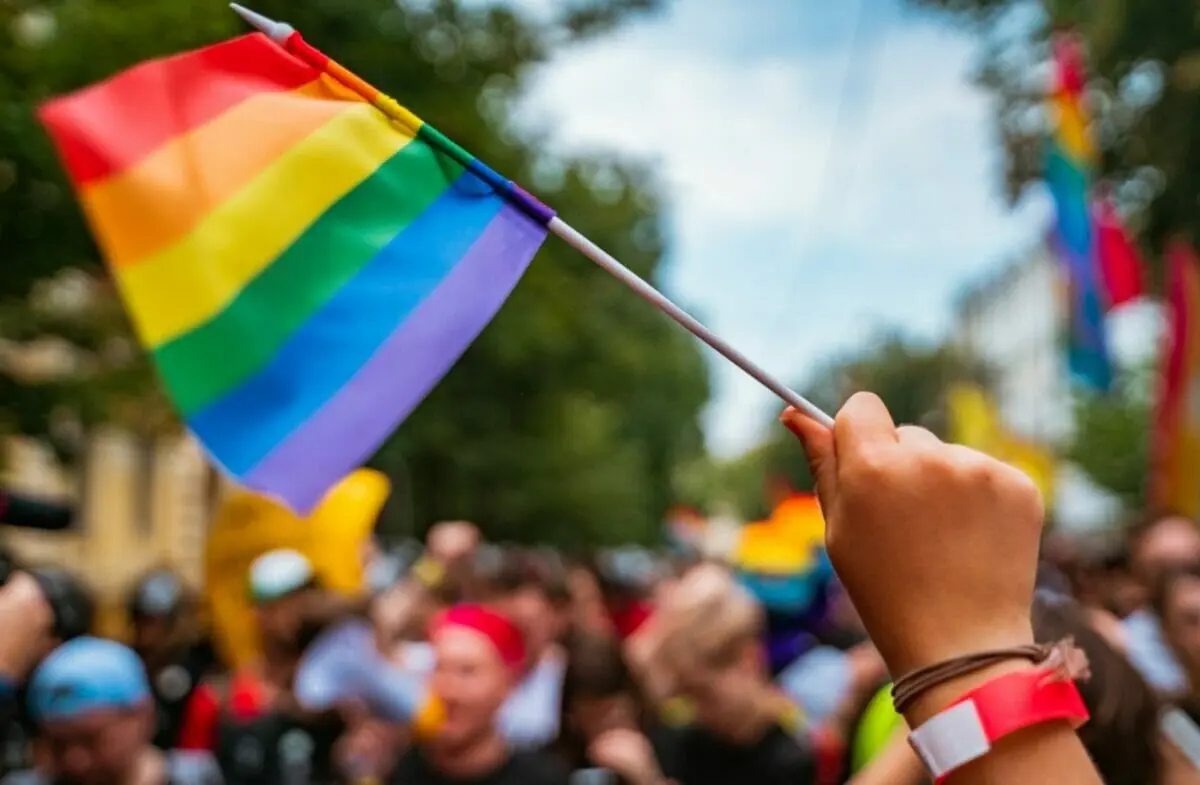
The rainbow pride flag has six horizontal stripes: red, orange, yellow, green, blue and violet. Gilbert Baker designed the original in 1978 for San Francisco’s Gay Freedom Day, and it’s been the universal symbol of LGBTQ+ pride ever since. Every stripe means something. Yes, even orange. Especially orange.
Rainbow flag: the quick facts
- Red: life.
- Orange: healing.
- Yellow: sunlight.
- Green: nature.
- Blue: serenity and harmony.
- Violet: spirit.
- Created by: Gilbert Baker in 1978; the six-stripe version has been standard since 1979.
- Earlier and later versions: the original eight-stripe flag, the Philadelphia flag and the Progress Pride flag.
Want to fly one? Grab a rainbow pride flag from our shop.
The LGBT rainbow flag represents lesbian, gay, bisexual, transgender, and queer (LGBT) and queer pride, as well as LGBT social movements. The colors of the LGBT pride flag, also known as the gay pride flag or LGBT pride flag, depict the LGBT community’s variety as well as the “spectrum” of human sexuality and gender.
Based on the original Gilbert Baker Pride Flag (but with two fewer stripes), this is the most commonly seen LGBT flag in the world and is the most universally recognized.
The flag is most commonly flown horizontally, with the red stripe on top, as in a real rainbow.
Rainbow flags, as well as a variety of rainbow-themed merchandise and color schemes, are now used by LGBT people and supporters as an outward representation of their identification or support.


FAQ: the rainbow flag
What do the six rainbow flag colors mean?
Red for life, orange for healing, yellow for sunlight, green for nature, blue for serenity and violet for spirit.
Who created the rainbow flag?
Gilbert Baker, an artist and activist, for San Francisco’s Gay Freedom Day in 1978.
Why did the rainbow flag originally have eight stripes?
Baker’s first design included hot pink and turquoise. Both were dropped by 1979, partly because the fabrics were hard to get.


