


Cecilia Miller is a lesbian love warrior and educator fighting for queer justice and ensuring every shade of the rainbow shines bright & bold!
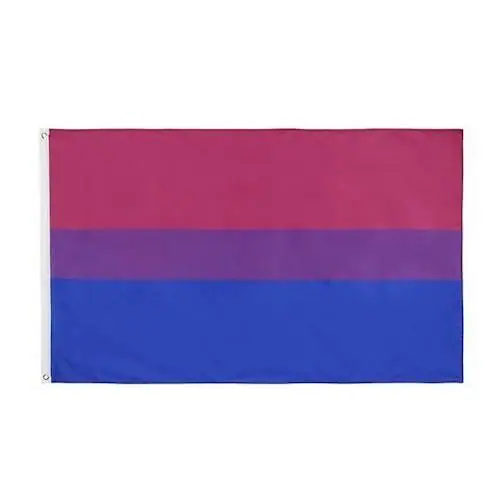
The bisexual pride flag has three horizontal stripes: magenta, lavender and royal blue. Designed by Michael Page in 1998, it gave bisexual people a symbol of their own at a time when they were routinely erased from both gay and straight spaces. The overlap stripe in the middle is the whole point: bi people aren’t half of anything.
Bisexual flag: the quick facts
- Magenta (top): attraction to the same gender.
- Royal blue (bottom): attraction to different genders.
- Lavender (middle): the overlap, attraction to both.
- Proportions: the stripes are 2:1:2, so the middle stripe is narrower.
- Created by: Michael Page, unveiled on December 5, 1998.
- Bi Visibility Day: September 23.
New to the term? Start with what bisexual means. Want to fly one? Grab a bisexual pride flag from our shop.
A bisexual person is someone who is sexually attracted to both men and women. Bisexuality may also be interpreted as a person with romantic or sexual attraction to people regardless of their sex or gender identity, how this is known more specifically as pansexuality.
Michael Page designed the bisexual pride flag in 1998 to give the bisexual community a symbol that was comparable to the gay pride rainbow flag. He aimed to increase visibility towards the bisexual community, because bi-erasure is a real thing – and is arguable just as big a problem then as it is now.
The bisexual flag has three colors. Here’s what they all mean:
- Pink represents same-gender attraction.
- Blue represents sexual attraction to the opposite gender. In the case of non-binary genders, it refers to sexual attraction to a different gender.
- Purple (the overlap between pink and blue) represents sexual attraction to two or more genders.

FAQ: the bisexual flag
What are the bisexual flag colors?
Magenta, lavender and royal blue.
Who created the bisexual flag?
Michael Page, who unveiled it in December 1998.
What does the purple stripe mean?
It’s where pink and blue overlap, representing attraction to more than one gender.


